Creative poems, thought and writings. Complaints. Insights. And more…
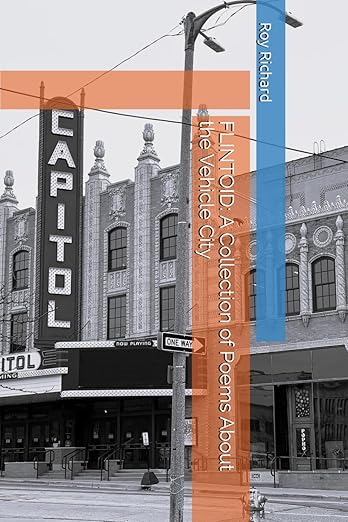
FLINTOID: A Collection of Poems About the Vehicle City by Roy O Richard, Sarah Louks, Ralph H Marlatt, Katherine Cary-Place, and Gaylia Kenslow-Stogsdill – Rostie Publishing
A Collection of Poems About the Vehicle City
In memory of all those who made and continue to make this place home. The industrial city of Flint sits on the banks of the Flint River, a significant source of commerce and transportation for the Ojibwe Nation. The river, called Biiwaanagoonh-ziibi or Flinty River by those earlier people, drew in European trappers. In 1819, the first of these, Jacon Smith, realized the area's significance, not only the river but its location between Detroit and Saginaw. From the small trading post in Smith’s Day grew today's city. Flint has rebirthed itself many times. From trappers to lumber barons, the landscape changed in the first few years. Those industries created the formation of carriage factories that later grew into auto factories. 1937 saw the birth of the United Auto Workers Union, forged from the famous sit-down strike.
Flint’s population reached just under 200,000 in 1960 as General Motors increased its holdings in the city. In 1978, GM employed 80,000 people here in its factories.
The economic crisis, foreign competition, and restructuring of manufacturing led to GM's pulling much of its employment out of the city. In the heyday, the factory workers or shop-rats led an almost mystical life. Good pay, fantastic entertainment, and seemingly never-ending prosperity and good times.
In 1980, a local radio station, WWCK 105.5 released a parody of the Rolling Stones Miss You called Flintoid. This song mainstreamed the nickname Flintoid and tells a true story of the shop workers.
 Ramblings of an Old Coot