Creative poems, thought and writings. Complaints. Insights. And more…
Diary of a Sitdowner by Francis L O’Rourke – Rostie Publishing
The Flint Sit-Down Strike of 1936-1937 was a landmark labor protest that fundamentally changed industrial relations in the United States.
The strike was organized by the fledgling United Auto Workers (UAW) union against the world's largest industrial corporation at the time, General Motors (GM). The workers involved were thousands of GM employees in Flint, Michigan, and other cities who took the unconventional and highly strategic action of occupying the factories.
Workers were seeking recognition for the UAW as their sole bargaining agent to negotiate for:
Better Working Conditions: The assembly line was often sped up, forcing workers to a brutal pace and in unsafe conditions.
Job Security: Workers had no protection from being fired or laid off arbitrarily, especially for union activity.
Wages and Grievances: They demanded fair minimum wages, a proper system for handling complaints, and an end to the piecework pay system.
The workers' key tactic was the sit-down strike, where they occupied the plant instead of picketing outside. This was effective because it prevented management from bringing in strikebreakers (scabs) and protected the vital factory machinery from damage, which GM feared.
After 44 days of occupation—during which strikers repelled police attacks (like the "Battle of the Running Bulls") and were supported by an outside women's "Emergency Brigade"—the strike ended in a major victory for the union.
The most significant results were:
Union Recognition: GM formally recognized the UAW as the bargaining agent for its employees, a breakthrough that legitimized the unionn.
Improved Conditions: The settlement led to negotiations for better wages, a grievance system, and safety improvements.
Catalyst for Labor: The successful strike provided a powerful model for organizing and spurred massive growth in union membership, leading to the unionization of the entire American automobile industry and helping to establish the modern American middle class.
Francis L. O'Rourke participated in the Flint Sit-Down Strike against General Motors (GM) and the United Automobile Workers (UAW) from December 30, 1936, to February 11, 1937.
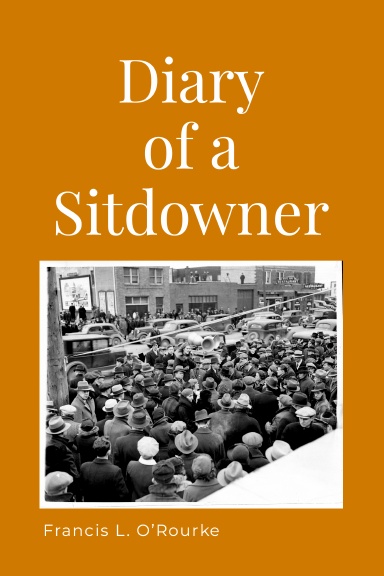
The diary of one of the striking General Motors workers who occupied their factories between December 1936 and February 1937.
 Ramblings of an Old Coot