Creative poems, thought and writings. Complaints. Insights. And more…
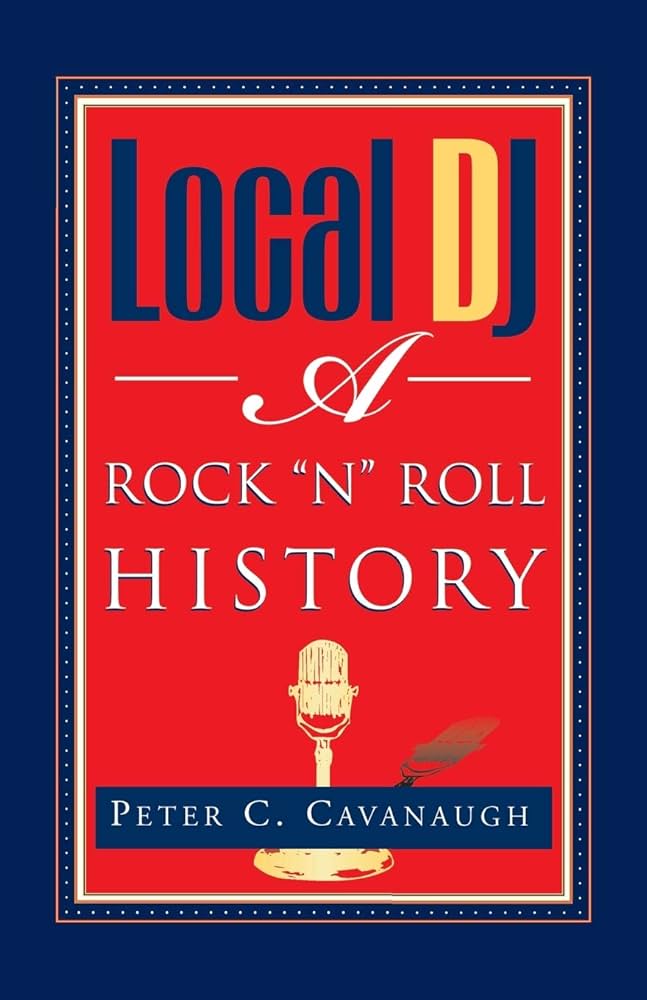
Local DJ: A Rock ’n’ Roll History by Peter L. Cavanaugh (Peter ‘C’) – Flint Book of the Week
At first glance, the book reads as an autobiographical memoir, but Cavanaugh arranges his recollections as an interwoven mosaic of personal stories, industry anecdotes, and cultural history. Rather than a strictly linear life story, the narrative jumps between on-air moments, concert promotions, and broader reflections on how rock music transformed American youth culture from the late 1950s through the modern era.

The core threads are (1) Cavanaugh’s rise from a teenage DJ with phenomenal local ratings to a major Midwestern radio personality and programming executive, (2) his work promoting and producing hundreds of live rock shows—many of which featured now-legendary acts—and (3) his insider perspective on how local radio stations helped break regional artists and shape popular taste. These elements are blended with colorful behind-the-scenes portraits of artists, booking agents, station managers, and fans.

Readers will find entertaining, often raucous chapters about concert promotion (Sherwood Forest “Wild Wednesday” shows are a recurring example), early spins of records by acts that later exploded nationally, and candid assessments of the radio business as it moved from scrappy local stations to corporate groups. The voice is anecdotal, opinionated, and affectionate — part memoir, part oral history — with frequent name-drops of major artists Cavanaugh crossed paths with and promoted.

This is a must-read for regional music historians, radio buffs, and fans of Midwestern rock: it preserves an on-the-ground account of how local DJs and promoters built the circuits that launched careers and defined scenes. The book’s structure—personal memories woven into cultural commentary—makes it useful both as a memoir and as a primary-source snapshot of rock’s local ecosystem.

Notable / Memorable Moments in Local DJ

1) Bob Seger’s Acoustical Set at Sherwood Forest
One of the most dramatic stories: Cavanaugh booked Bob Seger for a “Wild Wednesday” show at Sherwood Forest, but Seger insisted on doing a solo, all-acoustic performance. Cavanaugh and the promoter scrambled to rework set times to make it happen. The audience reacted poorly at first — they shouted for “heavy music” and expressed frustration. In a spontaneous, high-stakes move, Seger joined organist Skip VanWinkle and drummer David Teegarden on a second stage, plugged into electric instruments, and launched into a full electric jam — including a triumphant version of “I’m Gonna Write a Little Letter (to My Local Dee-Jay).” That impromptu performance shifted the mood and became a powerful, almost magical moment of rock catharsis.

2) Booking Chuck Berry at Sherwood Forest
Cavanaugh recounts bringing Chuck Berry to Flint, doing a guaranteed booking with Berry for one of his Sherwood Forest concerts. Backstage, there’s a detailed, almost charming scene: after the show, Berry counts his guarantee in small bills — meticulously sorting and counting each stack, then flashing a big grin when he’s satisfied. During the encore, Berry does “My Ding-A-Ling”, getting the crowd to participate in a sing-along, a playful, almost cheeky moment in a rock legend’s career.

3) AC/DC’s Early Flint Show / Personal Encounter
Cavanaugh describes discovering AC/DC early and programming them heavily, even before they became huge. A particularly vivid anecdote: at the December 5, 1977, show at Flint’s Capitol Theater, AC/DC performs for over 90 minutes, and the crowd refuses to let them leave. The encore: they play “It’s a Long Way to the Top (If You Wanna Rock ’n’ Roll)” — complete with the simulated bagpipe guitar effect. After the show, Peter pays them in cash, they go through a late-night Arby’s run (yes, rock stars and roast beef), and there’s a chaotic scene involving a head-butting incident, police, and a circle of band members defending themselves.

4) Sherwood Forest “Wild Wednesday” Drug Raid / Controversy
There was a planned police raid by the Genesee County Sheriff, John O’Brien, on a Wild Wednesday show at Sherwood Forest. According to Cavanaugh, the raid went off in a wild way: tension escalated, bystanders got involved, arrests happened, and rock concert-goers defended themselves. He reflects on this as part of the tension between rock counterculture and local authorities — a microcosm of larger societal clashes.

5) Early Radio Memories / Tragedy
Cavanaugh recalls that his father, Donald J. Cavanaugh, died while working on the radio (he suffered a heart attack mid-broadcast) when Peter was very young — a deeply personal and formative memory. He also recounts his teenage years in Syracuse (before Flint) working as a DJ, how he loved being on the air, and how he slowly built his early career.

6) Promotional and Radio Stunts
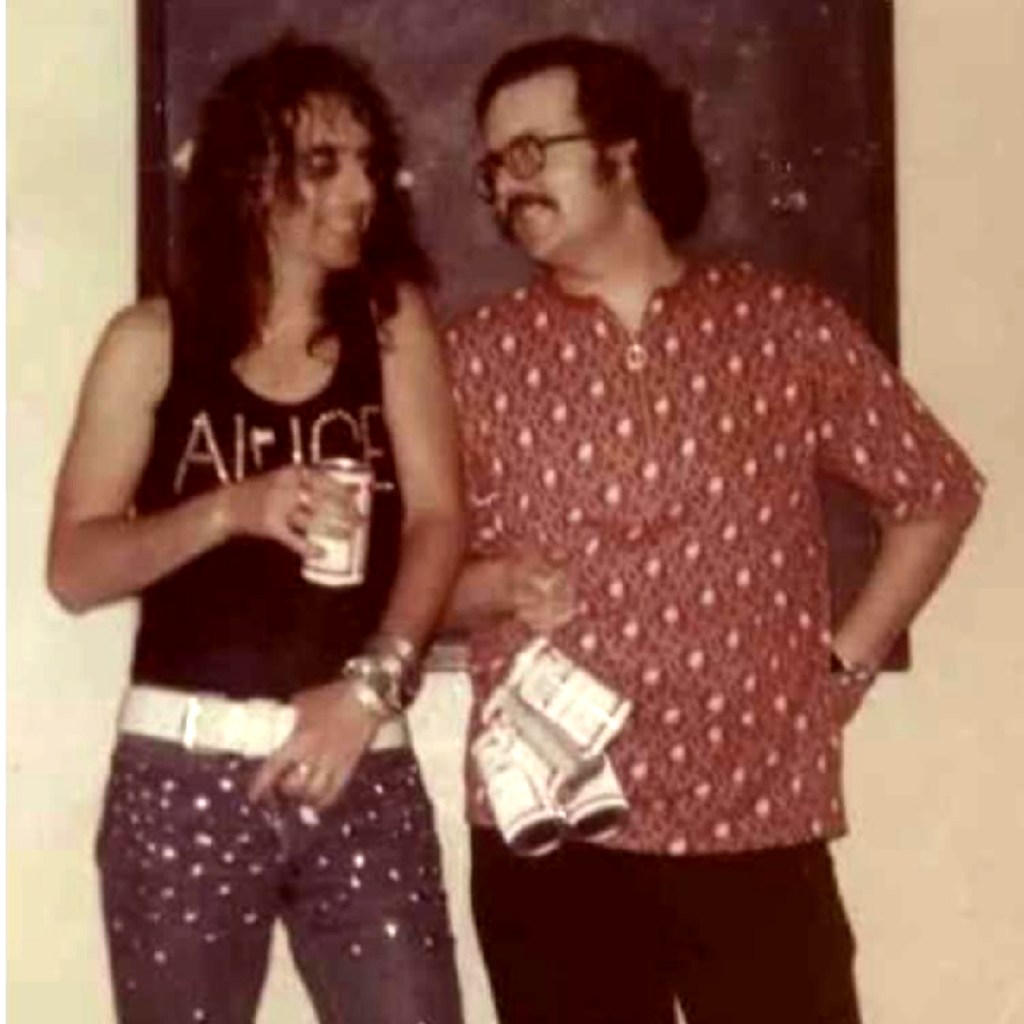
He describes creative radio promotions: for example, giving away “ten days on the road with Alice Cooper,” or flying listeners to London with Bob Seger when Seger had a European debut. There’s also mention of giving away concert tickets, running wild promotional campaigns, and using radio as a powerful marketing tool beyond just playing records.

Peter C. Cavanaugh

Peter Lawrence Cavanaugh (September 8, 1941 – August 13, 2021) was one of the most influential radio personalities and music promoters in Mid-Michigan history—an architect of Flint’s rock-radio identity, a pioneer of concert culture in the region, and a distinctive voice in American broadcasting. Over a career that spanned more than five decades, Cavanaugh helped define what rock ’n’ roll sounded like in the Midwest and left an indelible mark on generations of listeners, artists, and aspiring broadcasters.

Cavanaugh was born in Syracuse, New York, and from an early age displayed an irrepressible fascination with sound, storytelling, and the electricity of live broadcasting. By the time most teenagers were just discovering rock ’n’ roll, Peter was behind a microphone. At only 16 years old, he landed a spot at WNDR in Syracuse—an astonishing achievement for someone so young, made even more remarkable by what followed: in short order, his program achieved an unprecedented 58% audience share. It became clear that Cavanaugh possessed the rare combination of charisma, instinct, and timing that defines a natural broadcaster.

While establishing himself as a rising star on the airwaves, Peter pursued a bachelor’s degree in Political Science at Le Moyne College. He juggled full-time classes with full-time work—an early example of his unstoppable drive.

In the mid-1960s, Cavanaugh moved to Flint, Michigan, a city whose industrial intensity and working-class grit paired perfectly with Peter’s dynamic approach to music. He joined WTAC-AM 600, “The Big 600,” which would become synonymous with his name.

At WTAC, Cavanaugh quickly became both an on-air personality and one of the station’s most important programmers. His voice—energetic, assured, and tinged with humor—became part of Flint’s cultural rhythm. Behind the scenes, he was crafting playlists that pushed boundaries. Cavanaugh championed artists who were new, raw, or untested, often spinning records before they reached national rotation. He played a crucial role in bringing acts like The Who, Bob Seger, Alice Cooper, AC/DC, and many others to Michigan listeners long before they became household names.

For youth growing up in Flint and the surrounding counties, Peter was more than a DJ—he was a guide through the rapidly expanding world of rock music.

Beyond radio, Cavanaugh developed a parallel career as one of the region’s most ambitious music promoters. He organized hundreds of concerts across the Midwest but became especially known for the legendary “Wild Wednesday” shows at Sherwood Forest, an outdoor concert venue in Davison. These gatherings drew thousands, helping define the local counterculture of the late 1960s and 1970s.

Cavanaugh’s concerts were famously eclectic—regional bands, national touring acts, psychedelic sounds, folk-rock, and heavy rock all found a home. These events helped cement Flint as a vibrant stop in the Midwest’s rock circuit.

By the late 1970s, Cavanaugh transitioned into senior management roles within the radio industry. In 1977, he became General Manager of WWCK-FM (105.5) in Flint. Under his leadership, the station became a ratings powerhouse, and his influence expanded into broader corporate broadcasting. He eventually rose to the position of Executive Vice President and Chief Operating Officer of Reams Broadcasting.

Throughout this period, Peter continued to mentor younger talent, develop fresh programming, and fight for the continued relevance of local radio—an increasingly difficult battle in the age of corporatization.

In later life, Cavanaugh turned to writing as another way of telling the story of rock music in the Midwest. His memoir, Local DJ: A Rock ’n’ Roll History, is both a personal chronicle and a history of the culture he helped shape. Part recollection, part social reflection, the book became beloved among fans, musicians, and radio historians alike.

Filmmaker Jim Baade later adapted the book into a documentary, Local DJ: The Story of Flint Rock ’n’ Roll, further cementing Cavanaugh’s reputation as one of the central figures in Michigan’s media and music heritage.

His work was honored nationally in 2011, when he was featured in the Rock & Roll Hall of Fame’s “On the Air” exhibit—recognition of his role as one of the country’s formative radio voices.

Following his retirement, Peter and his wife Eileen, whom he had married as a teenager, spent several years in Oakhurst, California, before relocating closer to family in the Cincinnati area. He never fully stepped away from commentary, publishing essays, columns, and reflections on politics, music, and culture.

Peter C. Cavanaugh passed away on August 13, 2021, at age 79. He was survived by Eileen and their four daughters.

Cavanaugh’s legacy is twofold. First, he helped shape the soundtrack of an entire region, curating and championing rock music during its most explosive decades. Second, he preserved and celebrated that history through promotion, mentorship, writing, and film.

In Flint—where factories once roared and radios once blared from every neighborhood—Peter C. Cavanaugh remains one of the defining voices of its cultural memory. For thousands who grew up with WTAC or WWCK, he was the companion in the car, the spark of a lifelong music passion, and the one who brought rock ’n’ roll into their homes.
 Ramblings of an Old Coot