Creative poems, thought and writings. Complaints. Insights. And more…
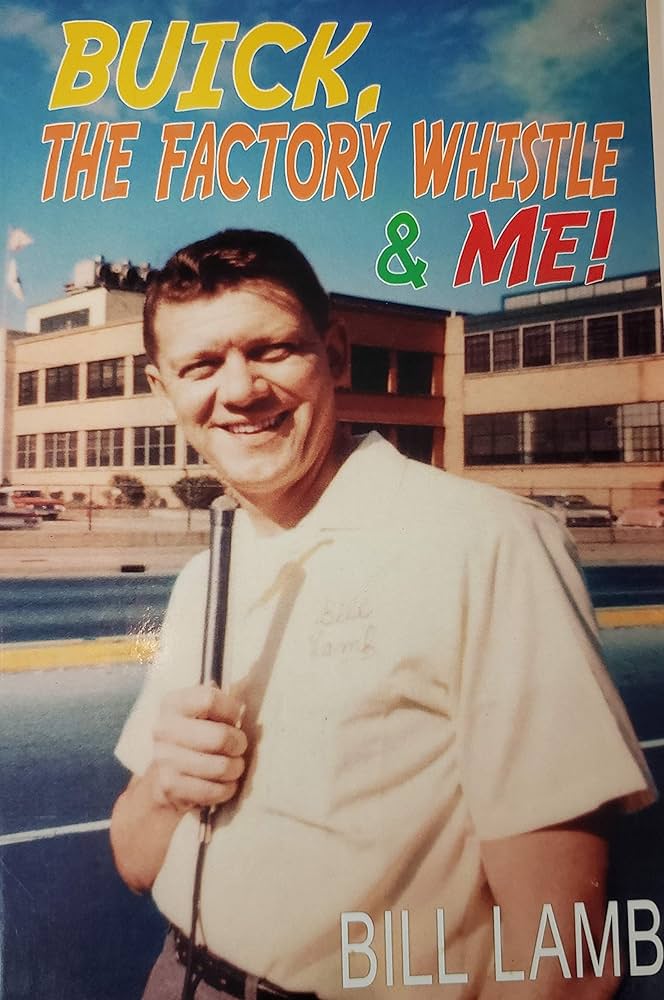
Buick, The Factory Whistle & Me (Bill Lamb) – Flint Book of the Week
In this warm, plainspoken memoir, radio legend Bill Lamb pulls back the curtain on a life lived at the intersection of a blue-collar city and its soundtrack. Part personal history, part oral chronicle of mid-century Flint, the book traces Lamb’s journey from itinerant broadcaster to the familiar voice who kept time with the Buick factory whistle. Through anecdotes, behind-the-scenes radio lore, and clear-eyed portraits of the people who tuned in every day, Lamb shows how a local radio show became an ordinary ritual that helped define a community.

Organized chronologically but rich with episodic detours, the narrative moves between three intertwined strands: Lamb’s own coming-of-age and broadcasting career; the everyday rhythms of Buick’s factories and the workers whose lives revolved around shift whistles; and the small but lively music scene Lamb nurtured through his record shops and studio. He writes about early mornings in the studio, last-minute record requests, cranky station managers, and the unforgettable listener calls that reveal the private lives behind public routines. These chapters humanize the industrial era: foremen, line workers, mothers, veterans, and teenagers all appear as characters whose hopes and disappointments are amplified by the AM radio signal.

More than nostalgia, the book is an elegy and an argument. Lamb celebrates the solidarity and dignity of factory life while also acknowledging the social and economic shifts that would reshape Flint. He reflects on how local broadcasting both served and reflected a community — offering companionship during long shifts, airtime for local musicians, and a public platform where civic life played out between the top-of-the-hour news and the next record.
Readable, empathetic, and full of small, memorable scenes, Buick, The Factory Whistle & Me will appeal to anyone interested in radio history, industrial America, or the lived experience of the mid-20th-century Midwest. It’s at once a personal memoir and a communal portrait — the story of one man’s microphone and the many lives it touched.

Notable Events in Buick, The Factory Whistle & Me
1)The Launch of the Factory Whistle Show
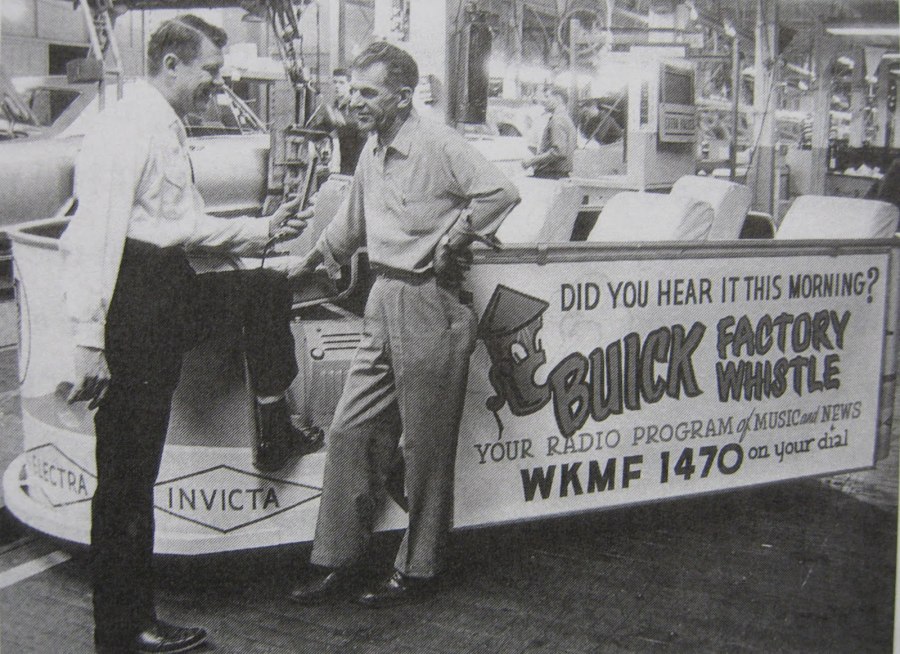
One of the centerpiece moments is Lamb describing how the Buick Factory Whistle Show was born. He explains the idea of timing a radio program to the factory whistle — something no one had done — and how it instantly became a ritual for Buick workers heading into or coming off shift.

2)Early Morning Life in the WKMF Studio
Lamb gives vivid accounts of the pre-dawn studio routine: cueing records by hand, reading announcements live, and dealing with unpredictable equipment. These “radio craft” passages are full of humor and nostalgia.

3)Memorable Listener Calls
A recurring highlight is Lamb recounting the quirky, heartfelt, and sometimes hilarious calls from listeners. Workers would ask for songs to be played for their spouses, children, or whole departments on the line. Some calls became local legends.

4)Interactions with Buick Workers
Lamb describes meeting the people who listened every day — from assembly-line veterans to new hires — and how they viewed the show as part of their workday rhythm. He includes touching stories of families who relied on the program’s timing for rides, lunches, and routines.

5)The Day the Whistle Malfunctioned
One favorite anecdote (often retold in local histories) is when the Buick factory whistle failed or blew at the wrong time, throwing off shift changes and the radio show. Lamb narrates the chaos with humor and affection.

6)Flint’s Music Scene & His Record Shops
A surprisingly high point is Lamb’s account of his Bill Lamb Record Shoppes and his small recording studio. He shares stories of young musicians, local bands cutting demos, and the challenges of running a music business in a car town.

7)The Human Side of Factory Life
The memoir is rich with scenes showing the dignity and camaraderie of assembly-line work: retirees stopping by the station, workers calling to mark milestones, and Lamb honoring the community during strikes or layoffs.

8)His Reflections on Flint’s Changing Identity
Late in the book, Lamb writes movingly about the decline of industrial Flint, the shrinking of Buick’s presence, and the emotional impact on the workers he’d served for decades. These passages often stand out as some of the most poignant.

9)The Final Factory Whistle Show
The book builds toward Lamb’s final broadcast — a mixture of gratitude, sadness, and pride. He describes his last sign-off and the wave of calls and letters that came from listeners who grew up with him.

10)Why the Whistle Still Matters
The concluding chapters reflect on what the whistle symbolized: discipline, community, routine, and the heartbeat of a city. Lamb ties his own life story into Flint’s broader narrative in a way that many readers find deeply meaningful.

Bill Lamb – Flint’s Voice of the Factory Whistle
Willard F. “Bill” Lamb (1924–2015) was more than a radio host; he was a daily companion to thousands of Flint workers whose lives revolved around the shift changes at Buick. For over a decade, his warm, steady voice filled kitchens, lunchrooms, and car radios across the city, making him one of the most recognizable broadcasters in mid-20th-century Flint.

Born in Portsmouth, Ohio, Lamb grew up during the Depression and came of age at a time when radio was the center of American entertainment. After settling in Flint, he found his way into broadcasting just as the city’s automotive industry was booming. He possessed an easy, congenial style that listeners trusted immediately—an asset that would soon link him permanently with the rhythms of factory life.

In the 1960s, Lamb launched what would become his signature program: The Buick Factory Whistle Show on WKMF-AM. Designed specifically for the thousands of men and women working the lines at Buick’s massive complex, the show aired in sync with shift changes, playing music, relaying local news, and offering friendly, familiar chatter during the busiest moments of the day. The show struck a chord. Workers tuned in faithfully, often before heading out the door or while taking a quick break between the blasts of the factory whistle that signaled each shift.

Lamb’s presence became part of the daily pulse of the city. Over his career, he hosted more than 11,400 episodes, and for over a decade, the program held the top ratings in Flint radio. To many residents, the Factory Whistle Show wasn’t just a broadcast—it was a ritual, a stabilizing presence amid the demanding pace of industrial work.

Beyond the microphone, Lamb immersed himself in the local music community. He co-owned Bill Lamb Record Shoppes, which became a gathering place for Flint’s young music enthusiasts, and he ran a small recording studio that helped local artists put their sound on vinyl during the 1960s and ’70s. His imprint, Bill Lamb Productions, produced and released regional music at a time when Flint had a lively but often under-documented creative scene. In this way, Lamb contributed not only to the city’s media history but also to its musical heritage.

Despite his public presence, Lamb remained grounded, gracious, and connected to the community he served. To listeners, he sounded like a neighbor; to co-workers, he was a consummate professional; and to Flint as a whole, he was a steady, reassuring voice during decades of immense industrial change.

Bill Lamb lived to the age of 90, passing away in 2015. His legacy endures in the memories of listeners who grew up with him and in the broader story of Flint’s cultural and industrial past. Few broadcasters captured the spirit of the city so completely. For generations of Buick workers, Bill Lamb wasn’t just on the radio—he was part of their day, every day, at the sound of the whistle.
 Ramblings of an Old Coot