Creative poems, thought and writings. Complaints. Insights. And more…
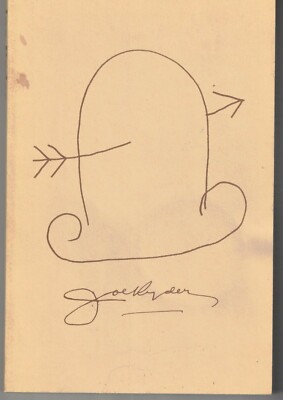
JOE RYDER by PHILIP J. BRAUN – Flint Book of the Week
Published in 1985 by the Big Brothers/Big Sisters of Greater Flint, Inc.. Softcover with a limited printing.

The book is a biography profile of Joseph Ryder, a figure known as “one of the first national leaders of the Big Brothers movement.”

The work provides firsthand accounts, organizational history, and personal reflections on Joseph Ryder’s role in shaping the Big Brothers program.

Along with info on Joe Ryder, it also covers:
•	The early development of Big Brothers/Big Sisters
•	Community mentorship
•	Youth outreach in the Flint/Genesee County region
•	Social service history and leadership

Philip J. Braun
Philip J. Braun (1920–2009) was a Flint businessman, World War II veteran, author, and respected community philanthropist whose work left a lasting imprint on civic life in Genesee County. Born on August 11, 1920, Braun graduated from Flint Junior College before earning a Bachelor of Science in Economics from the Wharton School of the University of Pennsylvania. He served in the United States military during World War II, spending the years 1944–1946 in Europe.

After returning home, Braun entered the family insurance business, eventually becoming an executive with Braun & Braun Insurance in Flint. He remained active in the industry until his retirement in 1982. Known for his sharp business sense, steady leadership, and unwavering commitment to his hometown, Braun transitioned smoothly from professional life to community-focused service.

Braun was also an accomplished writer, producing a range of local-interest publications. His works included eleven anthologies, a novel, and the biography Joe Ryder (1985), which chronicled the life of Joseph Ryder, an early national leader in the Big Brothers movement. Braun’s publications often centered on human stories, regional history, and the character of the Flint community. He also created books such as Faces, reflecting his interest in documenting the personalities and landscapes of Genesee County.

Deeply committed to civic involvement, Braun devoted much of his time and resources to improving community life. He supported and worked with numerous Flint institutions, including Big Brothers Big Sisters of Greater Flint, the YMCA, Downtown Kiwanis, Mott Children’s Health Center, the United Way of Genesee County, and various cultural and youth organizations. His philanthropy continued through the Philip J. and Sally J. Braun Fund, established with the Community Foundation of Greater Flint, which supports mental health programs, cultural institutions, and youth services in the region.

A quiet supporter of local arts and culture, Braun encouraged creativity in the community and within his own family. His son, Mark “Mr. B.” Braun, became a well-known pianist noted for his boogie-woogie and blues performances, a testament to the family’s artistic leanings.

Philip J. Braun passed away on December 9, 2009, but his legacy endures through his published works, his charitable influence, and the many Flint institutions strengthened by his generosity. He is remembered as a man who combined professional achievement, literary curiosity, and deep-rooted community service into a life of meaningful local impact.

Joe Ryder
Joseph T. (Joe) Ryder (Oct 19, 1906 – Apr 30, 1979) was a seminal figure in Flint’s youth-service community — best known as the first long-time executive director of Big Brothers of Greater Flint and an early local leader in organized youth mentorship and community schooling initiatives.

Born in 1906, Ryder later married Helen Strong Ryder and raised a family in the Flint area. His death is recorded in 1979; his family and local records preserve his memory.

Ryder is credited as the founding/early executive director of Big Brothers in Flint and served the organization for roughly 23 years. Under his leadership the local Big Brothers program grew into a model of community mentorship and helped catalyze broader youth services in the region. Contemporary histories of Flint note that Ryder’s work with Big Brothers dovetailed with Mott Foundation support and with early community-school initiatives.

Historical materials reference Ryder’s involvement in organizing the first Big Brothers Institute in Flint and identify him as a consultant on youth programs for Mott Foundation projects — demonstrating his role beyond local administration into regional program development and training.

A Joseph T. Ryder collection (related to Big Brother/Big Sister of Flint) is listed in the Genesee Historical Collections Center / UM–Flint archives, preserving records of the organization’s early period and Ryder’s work.

Big Brothers Big Sisters of Greater Flint continues to honor his name through leadership recognition (e.g., Joe Ryder Leadership Award cited in local press about BBBS events), indicating an ongoing institutional memory of his contributions.

Joe Ryder played a formative role in establishing and professionalizing youth mentorship in Flint. His decades of service helped build the organizational structures, community partnerships, and training efforts that allowed Big Brothers (later Big Brothers Big Sisters) to flourish locally — and his papers and the awards named for him keep that history visible to researchers and the community today.
 Ramblings of an Old Coot