Creative poems, thought and writings. Complaints. Insights. And more…
A Sex Revolution By Lois Waisbrooker-Nichols – Rostie Publishing
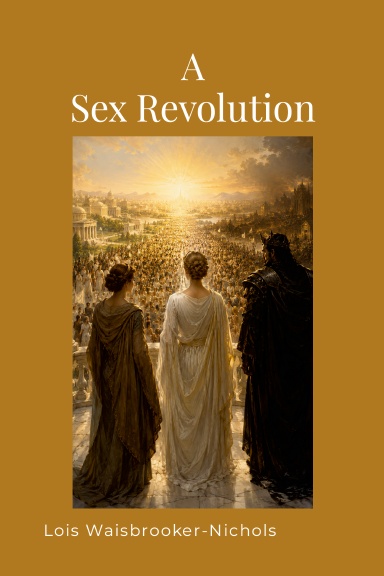
A Sex Revolution is a feminist utopian novel that imagines how society might change if women, guided by the values of motherhood, cooperation, and social responsibility, assumed leadership over public affairs. The story follows a widow who enters a visionary dream world where she witnesses a struggle between Lovella, the Spirit of Motherhood, and Selferedo, the Spirit of Power and militarism. Through a series of symbolic scenes, Waisbrooker critiques war, economic inequality, prostitution, forced motherhood, poverty, and the exploitation of women. She argues that many social problems stem from male-dominated systems built on competition and force, and proposes a "sex revolution" in which women help reshape society around compassion, mutual respect, economic justice, and the welfare of children. The novel is less a conventional story than a social and political allegory presenting Waisbrooker's vision of a peaceful, woman-centered society.
For literary historians, A Sex Revolution is notable as one of the more radical feminist-utopian novels of the 1890s, appearing alongside works by writers such as Charlotte Perkins Gilman, though Waisbrooker's emphasis on sexual autonomy and motherhood as a transformative social force was distinctive even within the reform movements of her day.
Lois Waisbrooker (1826–1909) was an American feminist writer, editor, publisher, lecturer, and social reformer whose work challenged many of the social conventions of the Victorian era. Born Adeline Eliza Nichols in New York, she experienced poverty, limited formal education, an early pregnancy, widowhood, and difficult marriages—experiences that helped shape her lifelong advocacy for women's rights. Adopting the pen name "Lois Waisbrooker" in the 1860s, she became active in the Spiritualist movement and later emerged as a prominent voice for women's autonomy, free speech, birth control, labor reform, and what was then called "social freedom." She edited several reform journals and frequently clashed with authorities over her outspoken views on sexuality and marriage. Although controversial in her own time, she is now recognized as an important nineteenth-century feminist and radical thinker.